
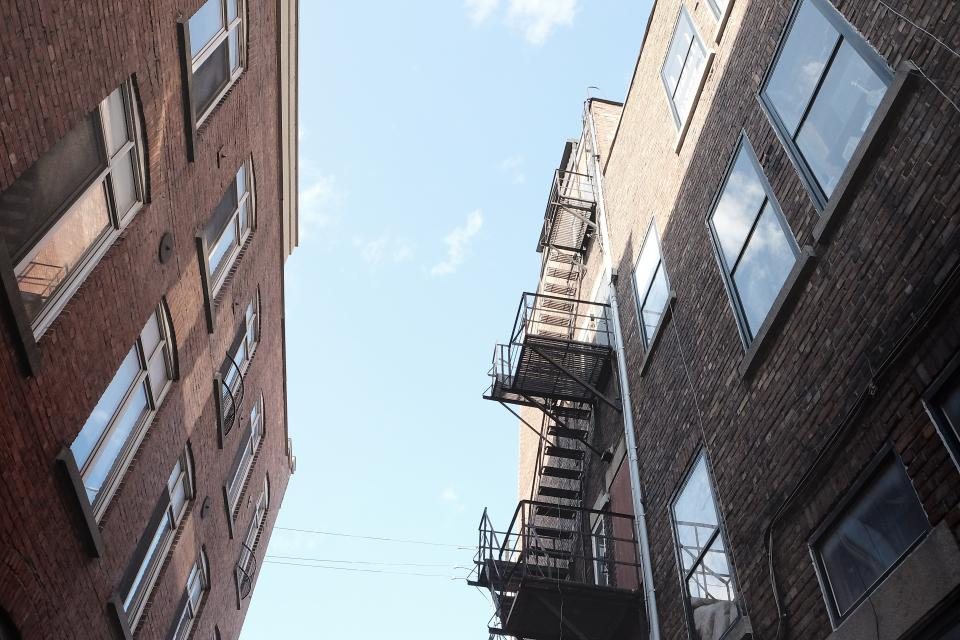
Ask a Montrealer of a certain age how their parents afforded a home and the answer is usually the same: they bought a duplex, lived upstairs and rented the ground floor to a cousin. The plex is the city’s native form of home ownership, a small apartment building that pays part of its own mortgage. It still works, but the rules, the buildings and the prices have all grown. Here is what buying and living in a Montreal plex really involves, from the economics to the tenants you inherit.
Duplex, triplex, and the basic arithmetic
A duplex has two dwellings, one above the other or side by side; a triplex has three, typically stacked; and the term plex stretches to four, five or six units in the taller buildings of Rosemont, Villeray and Verdun. The classic layout gives each unit its own entrance and outdoor staircase. Prices vary enormously by borough and condition, but in recent years a triplex in a central neighbourhood has commonly sold for somewhere between eight hundred thousand and one and a half million dollars, with duplexes somewhat below and the outer boroughs and Laval noticeably cheaper.
The economics rest on one comparison: what the rented units bring in against what the building costs to carry. Take a hypothetical triplex at a million dollars with two rented units bringing in a combined two thousand seven hundred dollars a month. Against a mortgage payment, property and school taxes, insurance, and a realistic maintenance reserve of perhaps one percent of the value each year, the rent might cover a bit under half the total. You still pay more each month than a condo would cost, but someone else is funding a large share of a much bigger asset. Long-standing tenants paying below-market rent shift that calculation, and in Montreal that situation is the norm rather than the exception, so run the numbers on the actual rents in the leases, not on what a vacant unit might fetch.
You take over the leases, not the tenants’ goodwill
When the deed is signed, the existing leases transfer to you automatically with all their terms. The tenants owe you the same rent on the same dates, and you owe them the same services. You cannot renegotiate, raise the rent outside the annual notice process, or ask them to leave because the building changed hands. The seller must provide copies of every lease and a statement of the rents. Check that the rents in the leases match what was advertised, that no tenant has an unusual clause such as included heating or a right of first refusal, and that the rent declared on each lease form matches the actual payments. Ask, too, whether any unit was recently vacant and re-rented at a jump; a new tenant has a window to contest a rent that exceeds what the previous tenant paid.
Repossession, in general terms
Often the unit a buyer wants is occupied. Quebec law allows an owner to repossess a dwelling to live in it themselves or to house a close relative, such as a parent or child, but the process is formal. The notice must be sent at least six months before the end of a lease of twelve months or more, and the tenant then has a month to answer. Silence counts as a refusal, and a refusal sends the owner to the housing tribunal, which will look at whether the intention is genuine and whether the repossession is being used as a pretext to raise the rent. If it goes ahead, the tenant is entitled to moving costs, and the tribunal may award additional compensation.
There are limits that matter when you shop. A building held by a corporation cannot repossess at all, and neither can undivided co-owners unless they meet specific conditions. Tenants who are seventy or older, have lived in the dwelling for at least ten years and have modest incomes are protected from repossession except in narrow circumstances. The rules were tightened again in 2024, and the details change, so plan on a year or more between purchase and moving into an occupied unit, and factor a possible payment to the departing tenant into your budget. Buying a plex with a unit already vacant, or with the seller occupying the unit you want, saves all of this.
Financing with rental income
Lenders like plexes, within limits. If you will live in the building, a duplex can be insured with as little as five percent down, and a triplex or quadruplex with ten percent, under the national mortgage insurance programs, subject to price ceilings. Five units or more is treated as commercial lending, with different rules and larger down payments. When calculating what you can afford, the lender adds a portion of the rental income to your qualifying income; how much depends on the lender and the insurer, and common practices include counting fifty percent of the rent as income or offsetting a larger share against the mortgage payment. The rents must be documented by the leases, so those copies matter for financing as well as for legal reasons. The mortgage stress test applies just as it does to any other residential purchase.
Two costs are easy to forget: insurance on a rental building costs more than on a house, and the welcome tax is steep on a million-dollar building.
Old buildings and what they ask of you
Most Montreal plexes were built before 1960, and the inspection is where you learn what that means. The list of usual suspects is well known to any inspector here: flat roofs with tar-and-gravel membranes that need replacing every couple of decades, brick facades that require repointing or rebuilding when the mortar fails, wooden outdoor staircases and balconies that rot, and basements that seep. Inside the walls you may find knob-and-tube or aluminum wiring, galvanized steel water pipes that corrode shut, cast-iron drains, and insulation that ranges from nothing to vermiculite. Older foundations in some neighbourhoods sit on clay that shifts in dry summers. Lead water service lines are common on streets built before the 1970s, and the city has been replacing the public side while owners are responsible for the private side.
None of this is disqualifying. It is simply the maintenance schedule you are buying along with the rents. A realistic owner sets aside money every month, plans one major project every few years, and learns which contractors return calls in February. In exchange you get something rare in a big city: a home whose tenants help pay for it, in a building that has already stood for a hundred years and will likely stand for a hundred more.