
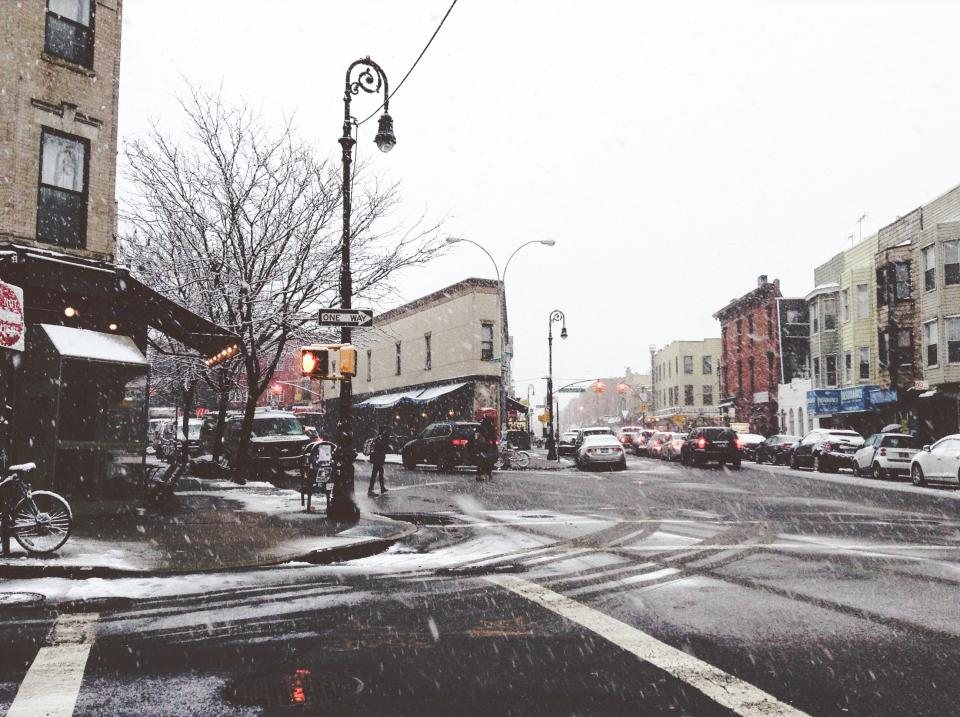
Nobody moves to Montreal for the winter, but everybody who stays learns to live with it. The season runs from late November to the end of March in a normal year, and the city gets roughly two metres of snow over that stretch. The thermometer sits well below freezing for most of January and February, and a handful of nights each winter drop to minus 25 C, with the wind chill pushing the felt temperature past minus 35. In practice, the first winter is mostly a matter of learning a few routines, buying the right gear, and understanding how the city operates when the snow comes down.
What the cold actually feels like
Montreal winters are dry and often sunny, which changes everything. A bright day at minus 15 C with no wind is genuinely pleasant to walk in if you are dressed for it. The days that hurt are the windy ones, especially on the downtown corners where tall buildings funnel the gusts, and the damp days around zero when the snow turns to slush and soaks through anything that is not waterproof. The average daily high in January hovers around minus 5 C and the average low near minus 14 C. Cold snaps arrive a few times a season and last two to four days; those are the nights when pipes in older buildings can freeze, so leave a tap dripping if your kitchen sits on an exterior wall.
Snow removal and the orange signs
Montreal does not just plough its streets, it loads the snow into trucks and hauls it away to dumps and chutes around the island. A full loading operation after a big storm covers thousands of kilometres of streets and sidewalks and takes several days. For residents, the part that matters is parking. When your street is scheduled for loading, crews plant temporary orange signs with a time window, usually the night before. Any car still parked there when the window opens gets towed to a nearby street and you pay a ticket. The city publishes a free app and a web map that show which streets are scheduled and where towed vehicles were moved. Check the app in the evening, move the car before the window starts, and never trust yesterday’s sign because the schedule shifts as operations progress.
Sidewalks are cleared by small tractor ploughs that run day and night after a storm. They are not fast. Expect to walk on packed snow for a day or two after a major fall, and expect the cross streets to be blocked by ridges until the loaders come through. If you rent a ground-floor unit, check your lease: in many buildings the landlord is responsible for clearing the entrance and the walkway, but plenty of leases push that job onto the tenant.
Heating and the electricity bill
Most Montreal apartments are heated with electric baseboards, and electricity in Quebec is among the cheapest in North America, with residential rates well under ten cents per kilowatt-hour. Even so, a poorly insulated older flat can produce winter bills two or three times the summer amount. Some leases include heat, many do not, so ask before signing. Practical habits go a long way. Set the thermostats to around 20 C in rooms you use and 17 C in rooms you do not. Close the doors of unheated rooms. Bleed radiators if your building has a hot-water system. If the building is heated with oil or natural gas, the landlord almost always controls it and the cost is in the rent.
Window plastic and other cheap fixes
Older triplexes and duplexes have single-pane or leaky wooden windows, and a good chunk of your heat goes straight out through them. The classic fix is a shrink-film kit: a sheet of clear plastic taped around the frame and tightened with a hair dryer. It costs a few dollars per window, takes twenty minutes, and makes a noticeable difference in draft and comfort. Add a foam draft stopper at the bottom of exterior doors, put weatherstripping on anything that rattles, and keep the curtains open on the sunny side during the day and closed at night.
A few other items belong on the first-winter shopping list, and this is the only list we will give you:
- Insulated boots with a real rubber sole and a grip, rated to at least minus 30 C
- A parka that covers your hips, plus a hat, a scarf and mitts rather than gloves
- A bag of coarse salt or gravel for the stairs, and a sturdy shovel with a metal edge
- A small humidifier, because dry indoor air in January cracks skin and lips
- A snow brush with an ice scraper if you own a car, and a set of winter tires, which are mandatory in Quebec from the first of December to mid-March
Ice on the stairs, salt on the boots
Montreal’s famous exterior staircases, the winding iron steps on the front of thousands of walk-up buildings, are charming in August and hazardous in February. They ice over after every thaw and freeze cycle. If you live above the ground floor, clearing them is usually your responsibility, and it is worth doing properly. Shovel promptly after each snowfall, before the snow gets packed into ice by foot traffic. Sprinkle salt when the temperature is above about minus 10 C and switch to gravel, sand or a calcium chloride product when it is colder, because ordinary salt stops working in deep cold. Keep a hand on the railing, take the steps slowly, and consider slip-on ice cleats if your street tends to glaze over.
Road salt is everywhere from December to April. It eats leather, stains wool and leaves a white crust on everything it touches. Wipe boots with a damp cloth in the evening, keep a boot tray by the door, and never walk salted boots onto a wood floor. Many Montrealers keep indoor shoes at work, and guests will remove their boots at the door without being asked.
Light in January
The hardest part of the first winter is often not the cold but the dark. In late December the sun rises around 7:30 and sets before 4:30, giving under nine hours of daylight, and much of that can be grey. Get outside at midday whenever you can, even for ten minutes. Many residents keep a light-therapy lamp on the breakfast table from November through February. Plan things to look forward to: a skating session on an outdoor rink, a walk on the mountain after fresh snow, a long dinner with friends. By the second week of February the days are noticeably longer, and by March you will catch yourself standing outside in the sun at minus 5 C thinking that it feels mild. That is the moment you become a Montrealer.