
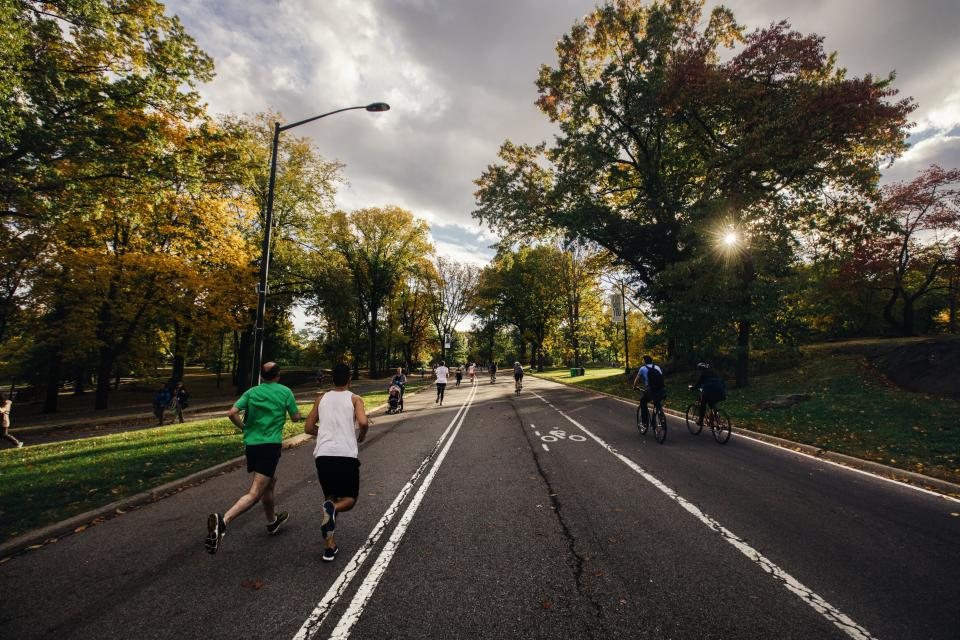
Montreal is one of the few large North American cities where living without a car is not a sacrifice but a genuinely reasonable default. Roughly a third of households on the island do not own one. The island is compact, the central neighbourhoods are dense and walkable, and the public transit network was built decades before the suburbs spread out. Add a new automated light-rail line, one of the oldest bike-share systems on the continent and a growing web of protected cycling lanes, and most daily trips are covered without ever looking for parking.
The metro: four lines and rubber tires
The Montreal metro opened in 1966, just ahead of the world’s fair, and its trains run on rubber tires rather than steel wheels, which is why they sound the way they do and why the whole system is underground: the tires cannot handle snow and ice. There are four lines, named by colour. The Green line runs east to west under the downtown core and along the southern half of the island. The Orange line forms a long U from the northwest through downtown and back up the east side, crossing into Laval at its northern end. The Blue line cuts across the middle of the island through the university districts and immigrant neighbourhoods north of the mountain, and it is being extended eastward. The Yellow line is short, with three stations, linking downtown to the islands and to Longueuil on the south shore. In total there are 68 stations, and the two big transfer hubs are Berri-UQAM and Lionel-Groulx.
Trains run from about 5:30 in the morning until roughly 1 in the morning, with a slightly later close on Saturday nights. Frequency downtown is every two to four minutes at rush hour and around eight to ten minutes late in the evening. Each station has its own architecture and public art, a legacy of the original design brief. The one real weakness is accessibility: elevators are being added year by year, but many stations still have only stairs and escalators.
Buses, night buses and the app
The bus network fills every gap the metro leaves. More than two hundred routes cover the island, and the busiest corridors have express and reserved-lane services that run every few minutes at peak. After the metro closes, a night network of around twenty routes keeps running until the morning, which matters if you work in a restaurant or go out late. Buses accept the same fare as the metro, and a single fare gives two hours of transfers in any direction, including a return trip. Real-time arrival data is available through the transit authority’s app and is reliable enough to plan around. In winter, expect delays after a storm and dress to wait ten minutes at a stop.
The REM: a new light rail
The REM is a fully automated electric light-rail network that began service in the summer of 2023. Its first segment links the south shore to the downtown central station over the new Samuel De Champlain Bridge, and the trains run driverless every few minutes from early morning to late at night. Later phases have opened in stages, extending the line north across the island toward the Deux-Montagnes area and west toward the airport and the far West Island, using and replacing an old commuter rail corridor. For anyone living near the northern or western branches, the REM has turned a slow bus-and-transfer commute into a twenty-minute ride. It is integrated into the regional fare system, so the same card and the same monthly pass cover it within the appropriate zone.
Fares and monthly passes in plain terms
Fares across the region are managed by a single regional authority using a zone system. Zone A is the island of Montreal, and it is what most residents need. The rechargeable OPUS card is the standard way to pay; you load it at station machines or online, and you tap it on every bus and at every metro turnstile. Single fares cost a few dollars, but almost everyone who commutes buys a monthly pass. For zone A that pass runs to roughly one hundred dollars a month at the time of writing, with reduced rates for students, seniors and children. Weekly passes and multi-trip bundles exist for occasional users. Compared with the true monthly cost of a car in this city, which includes insurance, winter tires, parking permits and the occasional towing during snow removal, the pass pays for itself many times over.
Cycling through the seasons
Montreal has been a cycling city for a long time and it keeps getting better. The island has well over a thousand kilometres of bike paths and lanes, including a backbone of wide, protected express routes with their own traffic lights. Bike commuting is common from April to November, and a surprising number of people keep riding all winter. The city now clears several hundred kilometres of its cycling network through the cold months, prioritising the express routes and the main connections into downtown. Winter cycling needs studded tires or at least a cautious pace, good lights because the days are short, and a willingness to skip the days right after a storm. Bike theft is a real problem, so use a solid U-lock and register the serial number.
BIXI and the bike-share season
BIXI is the public bike-share system, launched in 2009 and among the first of its kind on the continent. It now has around a thousand stations across the island and neighbouring cities, and a growing share of its fleet is electric. The main season runs from mid-April to mid-November, and since a successful pilot a few years ago, a reduced network of stations stays open through the winter as well. You can ride with a single trip, a day pass or a season membership, and members get their first thirty or forty-five minutes free on each ride, which covers most trips across town. The docks are dense enough downtown and on the Plateau that you rarely walk more than two blocks to find one, and the app shows real-time availability. For a newcomer, a BIXI membership plus a monthly transit pass is the classic no-car combination: metro for the long trips and the bad weather, bikes for everything else.
A few habits round out the picture. Keep a small folding umbrella and boots that can handle slush. Learn the walking shortcuts, including the underground pedestrian network that links downtown stations, malls and office towers. And when you truly need a car, for a trip to a hardware store or a weekend outside the city, short-term car rental and car-sharing services are everywhere. Owning a car in Montreal is an option, not a requirement.