
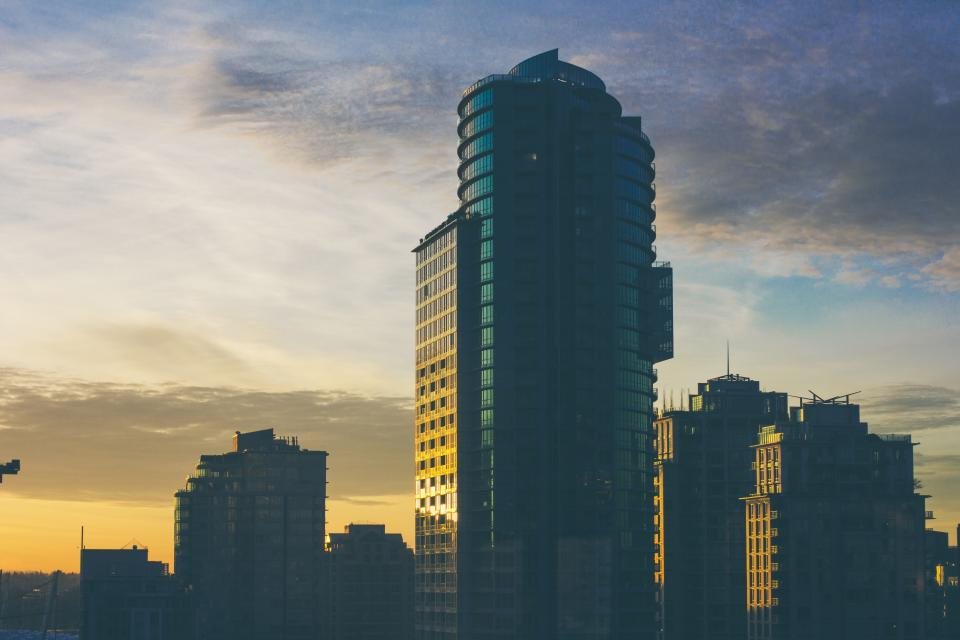
Twenty years ago Griffintown was a half-empty grid of parking lots, brick warehouses and the odd stubborn diner, tucked between downtown, the Lachine Canal and the Bonaventure Expressway. Today it is a forest of glass condo towers, one of the densest new residential districts in Canada, and the address on a remarkable share of the rental listings that land in a newcomer’s inbox. We have toured more of its show units than we care to count, and we have friends who love living there and friends who fled after one lease. This guide explains what was there before, what has been built, what it costs as of recent years, and how to tell a good building from a bad one.
From Irish shantytown to industrial heart
Griffintown is one of the oldest working-class neighbourhoods in the country. Irish labourers settled it in the 1820s while digging the Lachine Canal, and for a century it was a dense village of row houses, foundries, breweries and stables, with Saint Ann’s Church at its centre. The 1960s and 1970s hit it hard: the church was demolished, the city rezoned the area for industry, the Bonaventure Expressway sliced through, and by the 1990s only a few hundred residents remained among the warehouses. The park on the site of the church, where the stone outlines of the walls have been left in the grass, is the most eloquent thing still standing.
The turn came around 2010, when the city adopted a redevelopment plan and the first towers went up along Peel and Wellington. Within a decade, tens of thousands of units had been built or approved, and the population grew several times over. The New City Gas complex and the Horse Palace stable are among the few industrial buildings that survived and were repurposed; most of the low brick fabric went under the cranes.
Where it is and how you get around
Griffintown belongs to the borough of Le Sud-Ouest. Its rough borders are Notre-Dame Street West on the north, the Bonaventure corridor and the Peel Basin on the east and south, and Guy Street or so on the west, where it blends into Little Burgundy. Downtown is a fifteen-minute walk up Peel; Old Montreal is ten minutes east along the canal. The Orange line is the closest metro, with Lucien-L’Allier, Bonaventure and Georges-Vanier all within about ten to fifteen minutes on foot, and the area is one of the few in Montreal where a large share of residents simply walk to work. A light-rail station serving the district has been planned along the Peel Basin as part of the region’s new automated network. The Lachine Canal bike path runs along the southern edge, and the borough has added protected lanes on Wellington and Peel. Driving is possible but parking is expensive; most towers sell indoor spots separately for a considerable sum.
What the buildings are like
The housing stock is almost entirely condominiums built since 2010, in towers of ten to thirty storeys plus a few mid-rise projects along the canal. The typical unit is small: studios of 350 to 450 square feet, one-bedrooms of 500 to 700, and two-bedrooms of 800 to 1,000, with floor-to-ceiling windows, a balcony, in-unit laundry and the amenity package that has become standard, meaning a gym, a rooftop terrace, a pool and a lobby with a concierge. Ceiling heights, sound insulation and finish quality vary widely between developers, which is why we always suggest visiting a building on a weekday evening and listening for the neighbours.
A minority of the units are owner-occupied. A large share were bought as investments and are rented out, which makes Griffintown the easiest place in the city to find a furnished, short-term or mid-term rental, and one of the more transient. Condo fees, which cover the amenities, are a real monthly cost, and buyers should read the building’s reserve fund study before committing; some early towers have needed expensive repairs to windows, facades and underground garages.
Prices and rents, as of recent years
Griffintown is priced as a downtown product. As of recent years, a one-bedroom condo typically sells between roughly 400,000 and 550,000 dollars, a two-bedroom between about 550,000 and 800,000, and canal-view or penthouse units well above that. Condo fees generally add several hundred dollars a month, and the welcome tax on purchase and the municipal tax rate for new construction both catch first-time buyers by surprise.
Rents are among the highest per square foot in Montreal. A studio commonly lists around 1,400 to 1,700 dollars as of recent years, a one-bedroom from about 1,700 to 2,300, and a two-bedroom from 2,300 to 3,200, more if furnished or with parking. What you get for that is new, bright, secure and central; what you give up is space, and sometimes a building manager who answers the phone.
Daily life among the towers
Griffintown has matured faster than its critics expected. Notre-Dame Street West and Wellington now carry grocery stores, pharmacies, gyms, cafes, restaurants and bars, with the Little Burgundy stretch of Notre-Dame just west being one of the best restaurant rows in the city. The canal and its parks are the neighbourhood’s real backyard: the Peel Basin, the Parc du Bassin-a-Gravier with its wooden pier over the water, and the towpath that runs west to Atwater Market in fifteen minutes by bike. Atwater Market, in the Sud-Ouest, is the closest public market. A public elementary school has been planned to serve the growing number of children, though families with school-age kids remain a small minority, and the borough has been slow to add the playgrounds, arenas and libraries that older neighbourhoods take for granted. Health care is downtown or at the Glen site superhospital, a short metro ride away.
The demographic is young, professional and international: students, tech and finance workers, new arrivals on work permits, and a good number of empty-nesters who sold a suburban house. Noise from construction, from bars on Wellington and from the expressway is the standard complaint; the standard praise is being able to walk everywhere.
Who should consider it
Griffintown suits newcomers who want a turnkey, furnished, secure home for the first year in Montreal, professionals working downtown or in Old Montreal, and buyers who want a new building with an elevator and a gym and do not need much floor space. It suits less well anyone who wants a quiet street, a yard, a plex with character or a neighbourhood where the corner store owner has known your family for thirty years. As of recent years it has become a competent, convenient place to live; whether it ever becomes a neighbourhood in the older sense is the question its residents are still answering.